
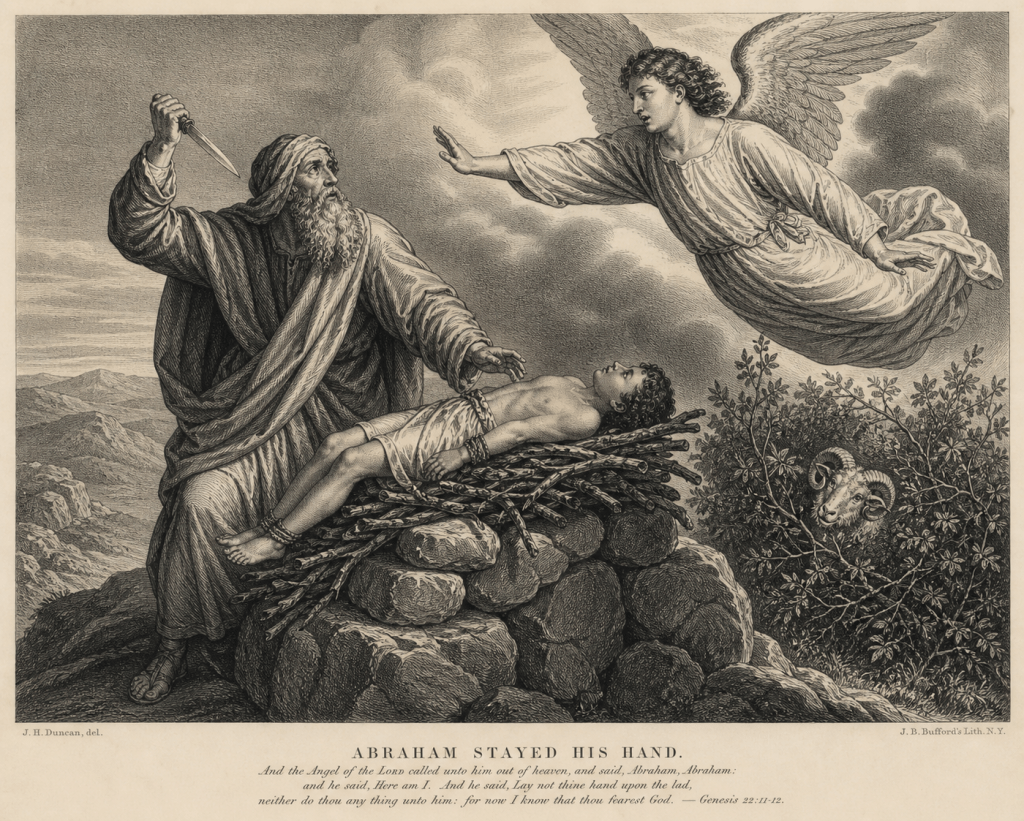
This sermon was originally preached during a Choral Evensong service in conjunction with The Anglican Way Conference on February 20, 2025. The service was held at St. John’s Episcopal Church in Savannah, GA. Many thanks to the Rev. Gavin Dunbar for the invitation and hospitality.
There are more than 40 lighthouses along Quebec’s maritime region of coastline. The job of a lighthouse is to alert ships to land’s presence, to help light their way through treacherous waters toward safe harbor, and to serve as a navigational reference point for maritime journeys.
The logistics seem easy enough: simply place a lighthouse atop any highpoint and use the light to guide ships. Right? Wrong! Part of the process includes choosing the right location for your lighthouse. Of the lighthouses adorning Quebec’s maritime coastline, one is situated in the wrong place. In July of 1829, construction began on the second lighthouse along the St. Lawrence River. Dubbed, “Pointe-des-Monts” and standing 90 feet tall, this lighthouse has one fantastic flaw: it is situated 2.5 kilometers too far east.
That’s right, after a difficult building phase, it was determined that they had built in the wrong location. The purpose of this specific lighthouse was to guide ships coming from both east and west, but the location was invisible to many approaching from the west. Initially, a grove of trees had to be felled in order to make the light more visible. But that didn’t last. Almost 40 years after construction a new plan was implemented: a cannon was fired every hour during fog and snowstorms. But that didn’t last, either. Finally, in 1918 a fog signal building was built 1.2 miles southwest in order to aid and correct the initial design flaw.
And all of this could have been avoided had they built in the right place.
While the Ancient Near East isn’t known for its lighthouses, we do have records of altars being constructed at specific points in time, in significant locations, and for special reasons. These altars help light the way by alerting people to God’s presence and serving as spiritual reference points.
And this is what brings us to Abraham.
Genesis 12 and Romans 4 form bookends around Abraham’s life lived with God. In Genesis we read about the calling of Abram and in Romans Paul waxes eloquent about Abraham’s faith in the Faithful One. But how do we get from Point A to Point B, from calling to inheritance?
Verse 9 gives us our clue: And Abram journeyed on by stages.
Yes, the author is describing Abram’s trek from Haran to Canaan, but I think this is an apt description of his 40 year relationship with God.
40 years of walking and waiting, prayers and petitions, fidelity and faithfulness.
40 years of promises made becoming promises kept.
40 years of God’s powerful presence.
40 years of learning to walk by faith.
After setting the stage with historical context, chapter 12 with these words: And God spoke to Abram. This comes out of nowhere. We skip over it at our own peril. This phrase is essential to our understanding of who Abram is: he is someone to whom God speaks.
Abram lived in a society with a pantheon of nigh on 4,000 gods. There were gods for the harvest, for rain, for health, and for a good hair day. None of them speak, none of them move, none of them save. Out of that plurality of gods, the true, Living, and one God, speaks to Abram and tells him to leave, to get out, to go.
Abram is asked to destroy his past by leaving his history behind in exchange for God’s preferred future…and he does it!
We are told that the speaking-God is also the promise-making-God.
God makes three important promises in verses 2 and 3; God promises Abram and barren Sarai a people as numerous as the sand and stars, a bountiful land, and that the nations of the world would be blessed through him. Abram believed. He takes the promise though he doesn’t know the way, and later it would be “reckoned to him as righteousness.”
God’s promises to Abram represent the outline of fulfillment to a promise God made in the Garden of Eden in Genesis 3. The first humans sinned but God promised rescue and redemption. There would be enmity between the woman’s offspring and the serpent, toil when working the ground, pain in childbirth…but God promised to set the world to rights!
These promises to Abram represent the beginning of that process!
This is a watershed moment as the God who is utterly other and wholly holy, picks one man through whom he is going to make for himself a people whom he is going to redeem, restore, reconcile, and rescue creation.
The writer says, “So Abram went, as the LORD had told him.” Abram believes that God is who he says he is and that he will do all he has promised. This is the basis of Paul’s argument regarding faith and works in Romans 4: Before circumcision, before flaming pots, before the promised son, Abram believed.
As Abram enters Canaan, God tells him that this land will be the inheritance for his offspring. This is the promised land for the promised people. God will eventually renew this promise with Abraham’s grandson, Jacob. Upon hearing God’s promise reiterated, Abram builds an altar at Shechem and another between Bethel and Ai. These holy places are sights of sacrifice and worship; these are spiritual lighthouses erected in great thanksgiving for what God has done, is doing, and will do.
This is a fine start to Abram’s story and Paul gives us the nice end, but Abraham’s journey-by-stages included many ups and downs, sins and disobedience on the way to inheritance and fulfillment. Through all of it, God’s steadfast love is constant.1
Abram and Sarai held tightly to the promises, but their bodies got older, her womb more barren, and Abram began to inquire of the LORD. He said, “Um, God, these promises are great but we’re not getting any younger…how do you plan on doing this for us?”
Despite their age-based limitations, Abram and Sarai knew they served a God who was limitless. Abraham believed that God gives life to the dead and calls into existence the things that do not exist.
As part of the promise, God made a covenant with Abram, giving him the name Abraham. This was a well-known ritual in the Ancient Near East. He didn’t sign his “Abraham Hancock” on a paper contract; to make a covenant, you would take animals and cut them in half and lay the half-body-parts in two lines. The contracting parties would stand at opposite ends of the carcasses and then pass between them. The meaning was explicitly clear: if I do not do what I have promised to do then may I be destroyed, cut off, annihilated like these animals.
YHWH makes that covenant with Abraham.
YHWH passes between both ways.
YHWH promises to keep both sides of the covenant!
Essentially, YHWH says “if I cannot keep this promise may my limitlessness experience limitations, may my immortality become mortal, may my omnipotence become impotent, may my immutability experience mutation.” YHWH pledges himself to Abraham. YHWH is Abraham’s past, present, and future.
Between the initial promise in Genesis 12 and the reiteration of the promise in Genesis 15 and 17, and despite twice passing Sarah off as his sister and taking matters into their own hands by conceiving a child with Hagar the slave rather than Sarah the wife, between all of that, Abraham is learning to walk by faith, not by sight with his God, day in and day out.
Eventually, Sarah gives birth to Isaac. This is the son of promise, the one through whom the rest of God’s promises would be fulfilled, the one through whom the inheritance would be given!
And they all lived happily ever after… Right?
Wrong!
The binding of Isaac opens with God speaking to Abraham, again. This is now a familiar voice for God has been speaking to Abraham for 40 years.
Unlike Genesis 12, the surprise is not that God speaks but the absurd command he has given Abraham.
God has just commanded the unthinkable of Abraham: kill your son, your only son. Regardless of how many times we tell the story, it is never not shocking. As Fleming Rutledge puts it, “There has never been another story like this in the whole world.”
The command may be unfathomable, but the language of the command is deeply familiar. It is formulated in an identical structure to the promise given to Abraham back in Genesis 12.
Genesis 12 Genesis 22
“Go from your country “Take your son,
and your kindred your only son Isaac,
and your father’s house whom you love,
to the land and go to the land of Moriah
that I will show you.” that I shall show you.”
The author wants you to understand that this new command is in keeping with the first commandment!
If Abraham destroyed his past in Genesis 12, God is now commanding Abraham to destroy his future. Isaac is the one through whom the promises will flow, Isaac not Ishmael, so if Isaac is gone then how will they come true? You imagine Abraham asking God that very question. And you can imagine God saying, I’ll tell you later.
At the ripe age of 113, Abraham will have zero prospects for a future.
All he has is his God,
His God who is both covenant maker and covenant keeper.
His God who has pledged himself to Abraham through covenant.
And for Abraham that is enough.
Abraham and Isaac have a three-day journey to Mount Moriah. This was probably father-son bonding time for Isaac. He’s thinking about the fly-fishing they’ll do when they get there; the salmon to be caught and the s’mores to be roasted. Little does he know that father and son bonding would become father binding son…
For Abraham, it must have been torture. Three days of dreading what was to come. I imagine Abraham sounding like Jesus in Gethsemane: LORD, let this cup pass from me! Isn’t there another way?
Abraham tells the servants to stay behind with the donkeys. “The boy and I are going to worship.” The purpose for this journey was always to worship the Living God through sacrifice and obedience..
Abraham lays the wood for the offering on Isaac. The promised son was charged with carrying the very wood that he would later be bound to for the sacrifice. Sound familiar?
Isaac then realizes they are missing the key ingredient: the sacrifice. In Abraham’s response you can hear the hint of hopeful desperation: God himself will provide the lamb. Abraham has no idea what is going to happen, how it is going to take place, but he knows that God has made him a promise, he knows that God has revealed himself as trustworthy and steadfast with his promises over the last 40 years.
They arrive at their final destination and begin to erect the altar. Abraham binds his son, his only son Isaac, whom he loves.
I wonder what it would have been like.
Did Isaac put up a fight?
Did Abraham overpower him or take him by surprise?
Or, did Abraham explain the covenant?
All we know is that Isaac is bound and Abraham does the unimaginable: he raises the knife.
The faith reckoned to Abraham as righteousness all those years ago was now on display; it was the trust that God was who he said he was and that he would do all he had promised. This faith is made possible not because of Abraham’s ability but because of the Faithful One.
He trusted in the LORD, believing that he would get Isaac back from the dead. He believed that God “gives life to the dead and calls into existence the things that do not exist.” And because of all of that, he offered up his son, his only son, the son whom he loved, the son of promise.
Abraham worshiped the Gift Giver rather than the gift given;
He surrendered to the Promise Keeper rather than idolizing the promise;
He sought the Covenant Maker rather than seeking a contractual loophole.
I think there’s some eucharistic theology in there…
Mercifully, graciously, God intervenes. The LORD knew that Abraham wouldn’t even keep his son, his future, his promise from the LORD.
Abraham’s past, present, and future all belonged to God.
It all always belonged to God.
All of it, including Isaac.
Abraham sees a ram caught in a thicket. The LORD has provided the sacrifice and Abraham and Isaac worship atop the mountain as promised.
They worshiped the God who provides!
The God who makes and keeps his promises!
Beloved, we see the Abraham-Isaac story recapitulated in the Gospels.
God did for us what he kept Abraham from doing: he sacrificed his son.
Jesus, the son of promise, is born to a virgin in Bethlehem;
At Jesus’ baptism the Father says, “This is my son, whom I love.”
Jesus is led like a lamb to the slaughter;
He is led into the “wilderness” to the top of a hill outside of the city.
Jesus carried his own wood up to the mountain top and there offered himself in obedience to God’s will, as an act of worship.
There would be no ram caught in the thicket this time.
Jesus is the lamb, the atoning sacrifice for the sins of the world.
Read through the lens of Jesus, Abraham’s story is a depiction of the eucharistic life. We may be missing bread and wine, but his journey by stages includes the other elements of the eucharist: praise, worship, sacrifice, covenant, and the unrelenting love of the Faithful One. The altars which Abraham builds are like lighthouses amidst a weary and wanting world stand as a reminder of God’s presence to light the way as a spiritual reference point. The eucharist is given to us as a lighthouse, as well, that we might find safe harbor. The one who is both priest-and-victim is ever with us. God is present in the highest of highs, the lowest of lows, and everywhere in between.
Friends, we worship the God who provides.
We worship the God who makes and keeps his promises.
We worship the God who calls things into existence that do not exist.
We worship the God who raises the dead to life.
In between the bookends of Genesis 12 and Romans 4, we discover the powerful presence and faithful fidelity of God. He promises to be present to us in the reading of Scriptures, in the praises and prayers of his people, and in the bread and wine. Our focus in eucharisteo, in the giving of thanks, is always and only on the Gift giver.
The Good News means there are no black out- or expiration dates on the love of God, no fine print, no “additional terms and conditions may apply.” Jesus’ Good News means that you don’t have to work harder because you can’t work harder. You cannot earn, attain, obtain, achieve, purchase, manifest, manipulate, merit, or procure the grace of God. He gives it, freely, to anyone who will accept and receive it. We must never lose sight of the fact that it is all gift.
We praise the God of Abraham because he is the God who called Abraham, who spared Isaac, who sent his Son, and raised him from the dead. We can place our trust in God because he has fulfilled his promise once and for all in the incarnation, crucifixion, resurrection, and ascension of Jesus. To this Faithful, Promising Keeping God belongs all might, majesty, and endless praise as we hail Father, Son, and Holy Ghost.
NOTES
- Tim Keller gave a wonderful schematic of Abraham’s walking-and-talking with God:
God: Leave your land; Abram: where? God: I’ll tell you later; He obeys.
God: Go to a land; Abram: where? God: I’ll tell you later; He obeys.
God: I’ll give you a son; Abram: how?; God: I’ll tell you later; He obeys.
God: Kill your son; Abraham: why? God: I’ll tell you later…Will he obey?
This schematic is taken from Tim Keller’s sermon on Genesis 22 in which he admits that he originally heard this schematic from a source he does not remember.
 Porter C. Taylor